
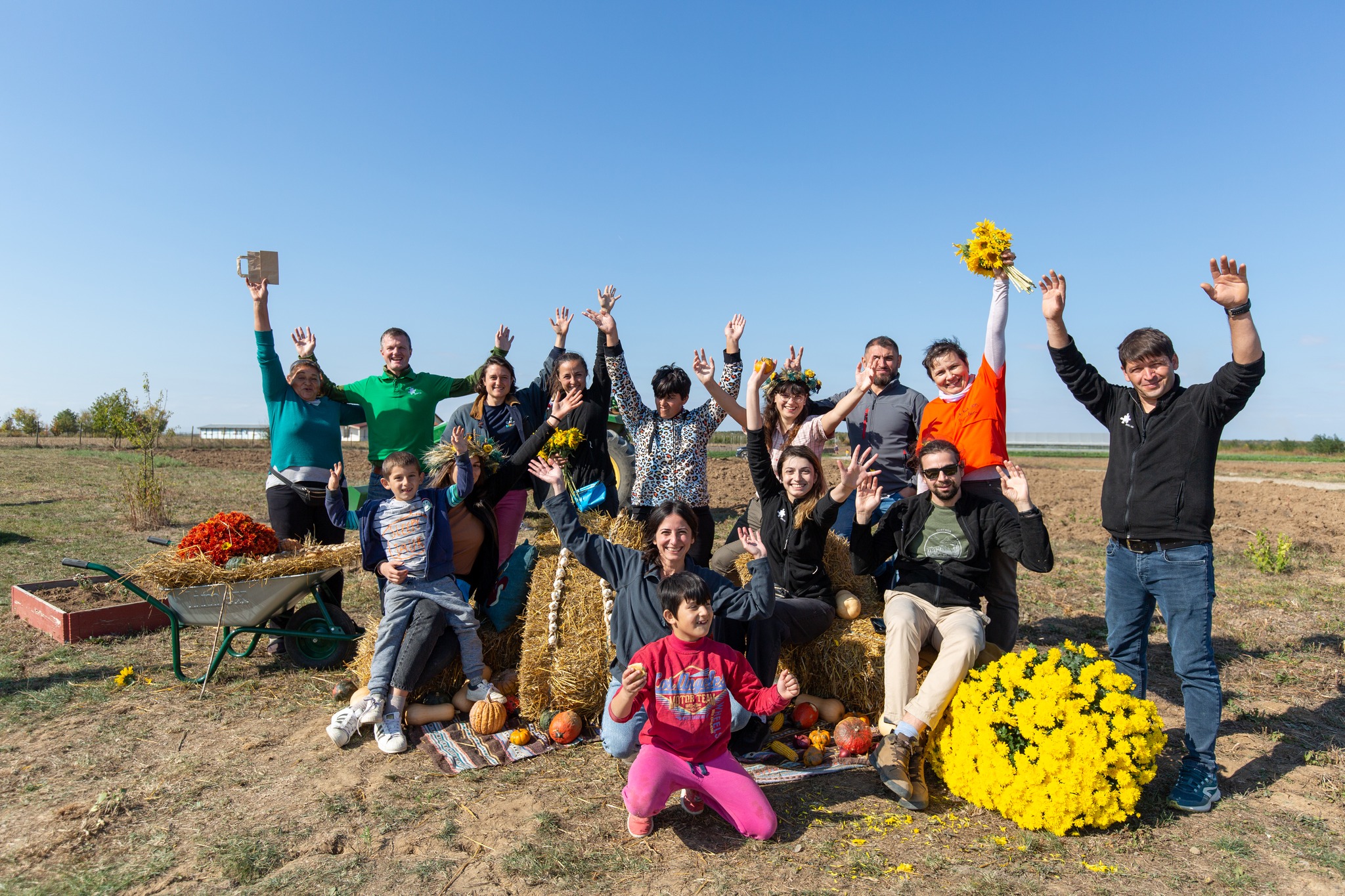
There is a word that follows some people around for years: unemployable. Not officially, not on paper — but in the way a CV gets set aside when it shows a five-year gap, a prison sentence, a period of homelessness, or a recovery from addiction. Ateliere Fără Frontiere started in Bucharest in 2008 with a straightforward response to that word. If nobody will give these people a first job, we will build the workplace ourselves. And we will build it out of the things other people throw away.
Ateliere Fără Frontiere is an association with economic activity, recognised as a public-utility organisation by Romanian Government Decision 156/2024, and part of Groupe SOS since 2019. It runs four socio-professional insertion workshops, and each one attacks a waste stream and an employment problem simultaneously. Educlick collects, dismantles and prepares electrical and electronic waste for recycling — and rescues the computers that can still be saved. Since 2008 the workshop has donated more than 30,000 refurbished computers. Over sixteen years, 3,163 educational organisations have received equipment, the equivalent of more than a tenth of all schools in Romania. A machine a company was about to scrap becomes an IT lab in a village school. Remesh takes advertising banners and mesh — material that has no recycling route other than incineration, which is particularly harmful because much of it is PVC — and turns it into bags, wallets and home accessories. Two tonnes of advertising waste have become more than 77,000 products. The sewing is done largely by women in insertion: survivors of domestic violence and human trafficking, and single mothers. Bio&co is a certified organic farm in the village of Ciocănari, Dâmbovița, less than 30 kilometres from Bucharest. It delivers seasonal vegetable baskets to more than 100 subscribers in all 52 weeks of the year. Because the farm is close, vegetables can reach subscribers on the day they are harvested. Logietic teaches packing, sorting and packaging — the concrete skills a warehouse or logistics employer will actually ask for.
A job alone does not undo years of exclusion. Around the work, Ateliere Fără Frontiere provides social counselling, insertion guidance, psychotherapy and educational support. In its 2024 reporting on the programme “Vreau să muncesc!” (“I want to work!”), the association recorded 650 hours of social and professional counselling. The point of the workshop is not to keep people there. It is to get them to the end of a supported pathway and then into a job on the open labour market, or in a protected form of employment.
Ateliere Fără Frontiere does not depend on donations to pay wages. Each workshop sells something: refurbished equipment and recycling services, remesh products bought largely by companies for events and corporate gifts, vegetable subscriptions, packaging services. On top of that, the association uses a specific piece of Romanian legislation. Two of its workshops, remesh and logietic, hold Authorised Protected Unit status under the company SC ECO Atelierul Social SRL. Companies with more than 50 employees that place orders with them can offset half of their disability levy. A client is not making a donation — they are meeting a legal obligation they already had, and getting a product for it. That turns a hard sell into an easy one. The insertion workshops have no separate legal personality. Revenue from economic activity, subsidies and sponsorship all go back into the association’s non-profit work.
Check the original article here!